
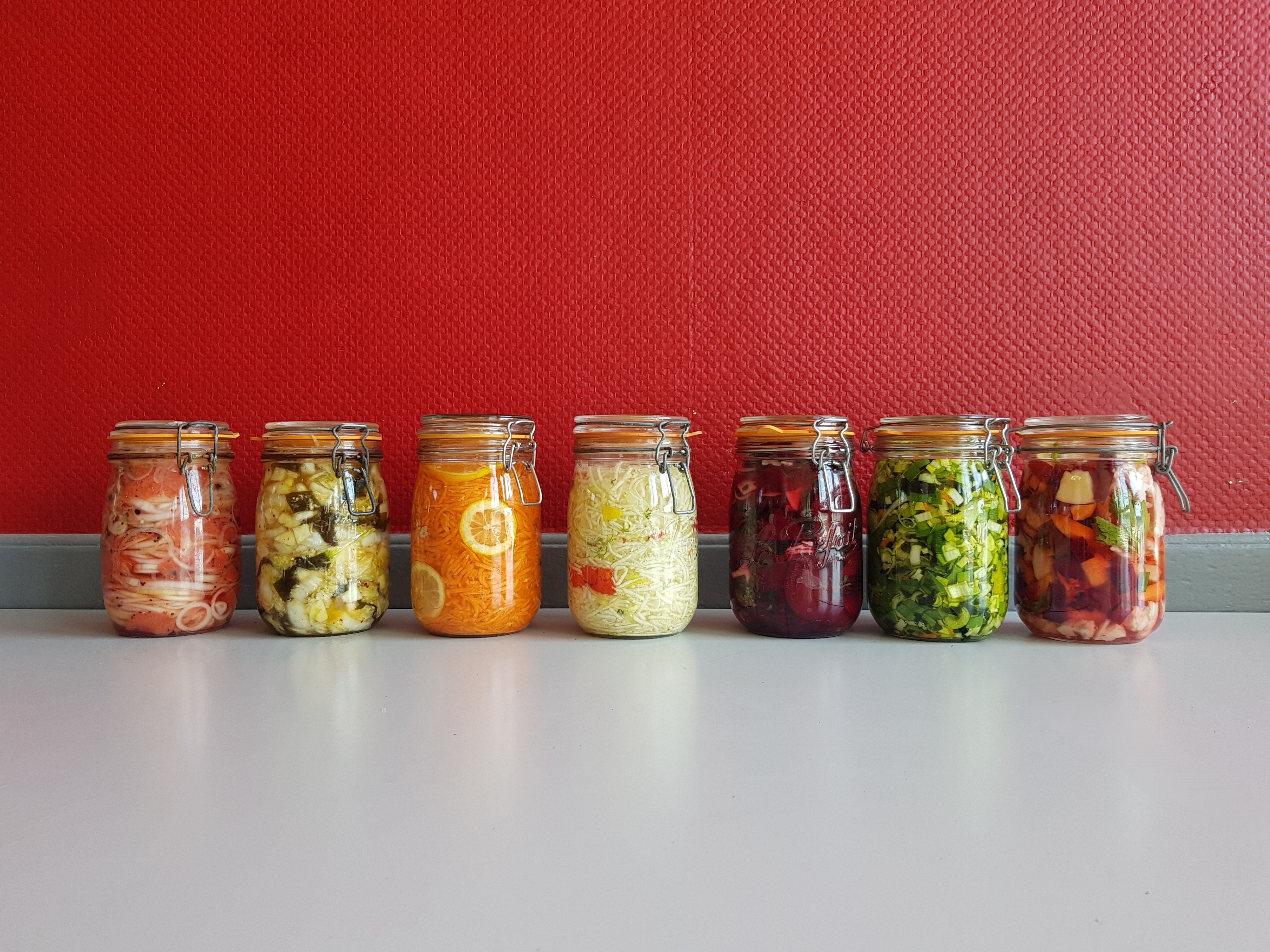
Who has never backed away from a jar of homemade sauerkraut, intimidated by those mysterious bubbles and that tangy smell? Rest assured: fermentation is undoubtedly the simplest, safest and oldest preservation method available. No need for complicated equipment or a biochemistry degree, just a jar, a little salt and a suspicion of patience. Follow the leader !
What exactly is fermentation?
It is an ancestral metabolic process by which micro-organisms (bacteria, yeasts, fungi) transform organic matter, generally sugars, into energy for their own survival. Along the way, they generate by-products like alcohol, acids or gases: that’s the magic.
We distinguish two main families:
-
Anaerobic fermentation, without oxygen: this is the principle of lactofermentation.
-
Aerobic fermentation, with oxygen: this is the case with vinegar, for example.
Beyond preservation, fermented foods are also easier to digest, they improve the assimilation of micronutrients and contribute to the balance of the intestinal microbiota.
In fact, you probably already eat fermented foods every day without knowing it! Bread (yeasts), beer and wine (alcoholic fermentation), vinegar (acetic fermentation) or even yogurt (lactofermentation) all come from this process.
Zoom on the lactofermentation, very popular at the moment: here, these are lactic bacteria (like Lactobacillus) who do all the work. Don’t worry, this has nothing to do with milk! They are so called because they transform natural sugars in foods into lactic acid.
Concretely, what is happening in your jar? Lactic acid accumulates and lowers the pH of the preparation. The environment becomes very acidic (pH less than 4.5): this acidity kills the “bad” bacteria but allows the good lactic acid bacteria to proliferate quietly. Result, a conservation method ultra safe which does not require cooking or freezing. This is the process used for sauerkraut, kefir, kimchi or yogurt!
An ally health validated by science
Long confined to the rank of ancestral preservation method, fermented foods are today recognized as true pillars of our health. Several recent scientific studies suggest that their regular consumption enriches the diversity of the intestinal microbiota while helping to reduce markers of chronic inflammation.
Beyond this role of immune shield, the work of microorganisms operates a real “ pre-digestion »: it neutralizes certain anti-nutrients, facilitates the assimilation of minerals (iron, zinc) and can enrich the vitamin content of foods. Kefir with vegetables lacto-fermented, these foods support digestive comfort and contribute to the general balance of metabolism. Inviting them to the table regularly is a simple gesture to cultivate your well-being from the inside.
Our best practices for success every time
For the lactofermentation, two techniques:
-
In brine (water + salt), ideal for firm and not very juicy vegetables such as carrot sticks.
-
In dry salting, for vegetables that naturally release juice (cabbage, lemon, beets, grated carrots).
In lactofermentation, we start from “nothing”: it is the micro-organisms already present on the food which initiate the whole process.
For other fermentations (kefir, kombucha, tempeh, Koji…), you will however need to use a ferment, also called a starter, to get started. These products are available on the internet or in certain organic stores.
The right dosage of salt : salt is the initial bodyguard of your jar, until the acidity takes over. The standard rule is 2 to 3% salt relative to the weight of the vegetables, or 20 g of salt per 1 kg of vegetables. Use sea salt without additives or fluoride: classic table salt can inhibit the development of good bacteria.
Traps to avoid
Too much chlorinated water, which will kill the good bacteria. For your fermentations, choose mineral water. If you're using tap water, let it sit in an open jug for about 2 hours so the chlorine evaporates.
Neglecting cleanliness. Poorly washed jars and utensils can introduce competing bacteria into your preparation and slow down the development of good bacteria. Always wash your equipment in hot, soapy water and let air dry, or wipe with a clean cloth.
Choosing the wrong container. Use a jar designed for fermentation, like our Super ranges, Color Vis or Bistrot: it lets the gas escape under pressure without letting air enter. To store your fermented drinks, opt for swing-top bottles. If the gas cannot escape properly and the pressure becomes too high inside the container, the container may rupture.
Do not completely immerse the contents of the jar. It is essential that the food does not come into contact with air: use a fermentation weight to keep it under the brine. Failing that, a clean stone or a cabbage leaf can do the trick very well.
Confusing Kahm's yeast and mold. Kahm's yeast is not a single yeast, but a generic term for a group of wild aerobic yeasts. It frequently appears in the form of a white or creamy veil on the surface of homemade fermented preparations: vegetables lactofermented, kombucha, kefir or vinegar. It is not dangerous, but can alter the taste or texture of your preparation. These wild yeasts love heat (above 25°C) and contact with air: if they settle, it is generally a sign of excess oxygen in the jar, a slightly low salt level, or a too slow start to fermentation.
To get rid of it: gently skim off the white veil using a clean spoon. If the rest of the jar smells good (a tangy smell) and the liquid remains very acidic, the contents are perfectly edible.
Forgetting to place your jar in the fridge once the desired result is achieved. As soon as you like the taste, place your preparation in the refrigerator to considerably slow down the fermentation and thus preserve the result obtained. Left at room temperature, fermentation continues, and the taste and texture continue to evolve.
Our tip : to get started with peace of mind, download our application Le Parfait. She accompanies you step by step in your preparations, in particular thanks to a salt calculator, a timer and notifications to stop fermentation at the right time. You will also find more than 500 recipes there.
How to integrate fermentation into your daily life?
As seen above, it’s a safe bet that you already consume it! To increase your daily ratio without disrupting your habits, there are a few simple tips:
-
Mix fermented grated carrots with regular grated carrots.
-
Add a few pickles to a salad or burger.
-
Slip a little fermented cabbage into a wrap.
-
Replace your syrups and industrial drinks with homemade fermented drinks.
Introducing small doses into your daily meals remains the simplest way to gently change your eating habits.
Precautions to follow
Even if fermentation is an extremely safe method of preservation, a few rules of caution are necessary: if your preparation has a hairy deposit, or colors such as green, black, blue or pink, it is mold. In this case, it is better to throw everything away without hesitation.
Another point of attention: fermentation can generate a tiny quantity of alcohol. Your kefir or kombucha may therefore contain a trace of it (generally below 1°). There are no strict contraindications for children or pregnant women, but if in doubt, ask your doctor for advice.
Likewise, in case of illness related to the digestive system, always seek the advice of your doctor before regularly consuming fermented foods.
FAQ: your questions about fermentation
Do you need special equipment to get started? No, a suitable jar (Super type, Color Vis or Bistrot), sea salt and good vegetables are enough to start a lactofermentation. For kefir or kombucha, you will also need a starter culture.
How long does fermentation last? This varies depending on the recipe and room temperature, usually from a few days to several weeks. The warmer it is, the faster the fermentation takes place.
Is the white veil on the surface dangerous? Not necessarily: if it is a white or cream veil (Kahm yeast), you can simply skim it off. On the other hand, any trace of color (green, black, blue, pink) or hairy deposit indicates mold, which should be discarded immediately.
Can we give fermented foods to children? Yes, in general without any particular contraindication, but ask your doctor for advice if in doubt, particularly because of the minute traces of alcohol that certain fermented drinks such as kefir or kombucha may contain.
All you have to do is get started! Discover our recipes to take your first steps into the world of fermentation:
So, ready to take out your jars and let nature do work? Download the app Le Parfait to accompany you step by step and discover more than 500 fermented recipes, both savory and sweet.
Our news
Getting started with fermentation: everything you need to know to get started with peace of mind
Who has never backed away from a jar of homemade sauerkraut, intimidated by those mysterious bubbles and that tangy smell? Rest assured: fermentation is undoubtedly the simplest, safest and oldest preservation method available. No need for complicated equipment or a...
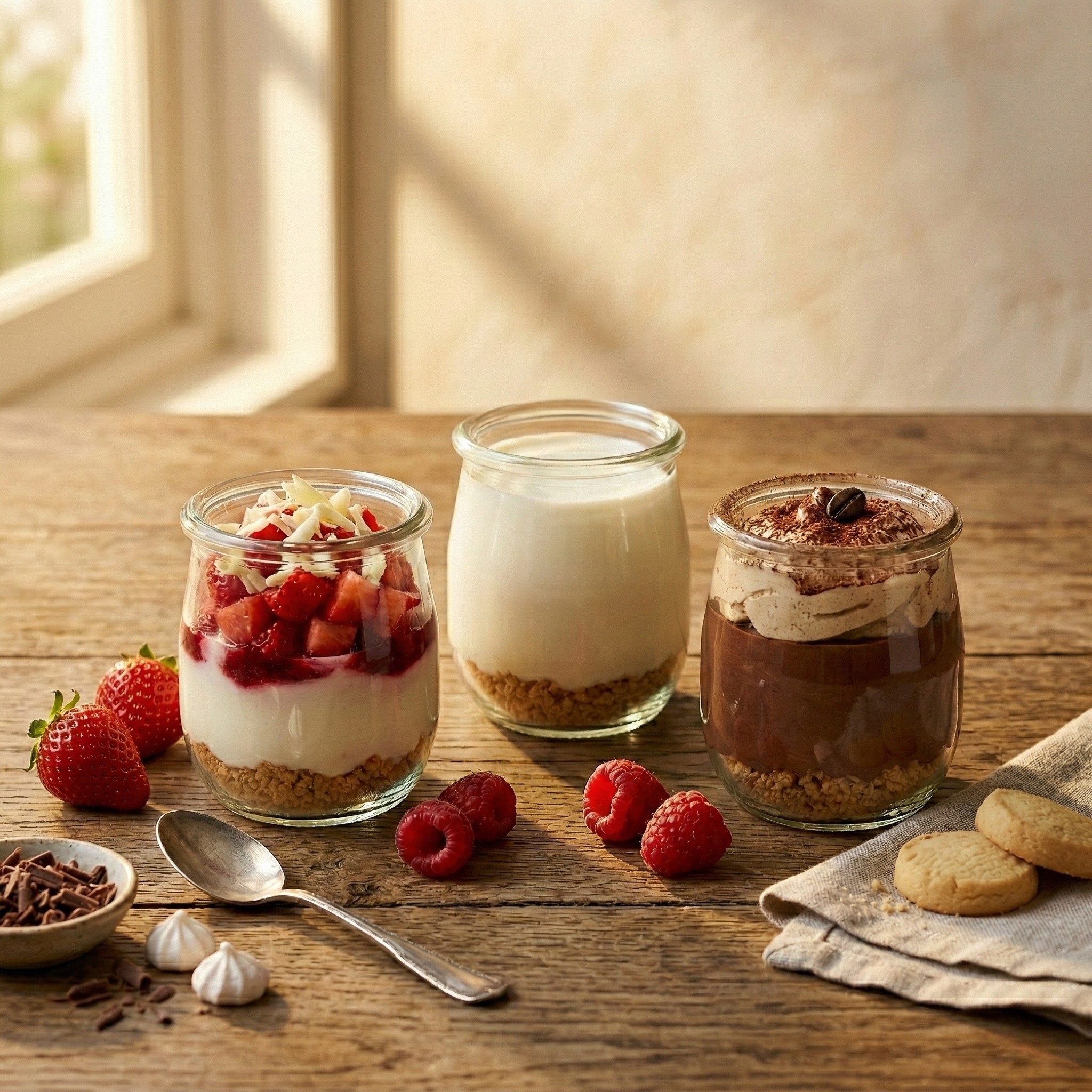
How to make yogurt without a yogurt maker in 6 steps?
You want to start making your own first homemade yogurts, but you don’t have a yogurt maker? Before investing, do you want to be sure that you are really going to do it? We understand you! Here is our complete...
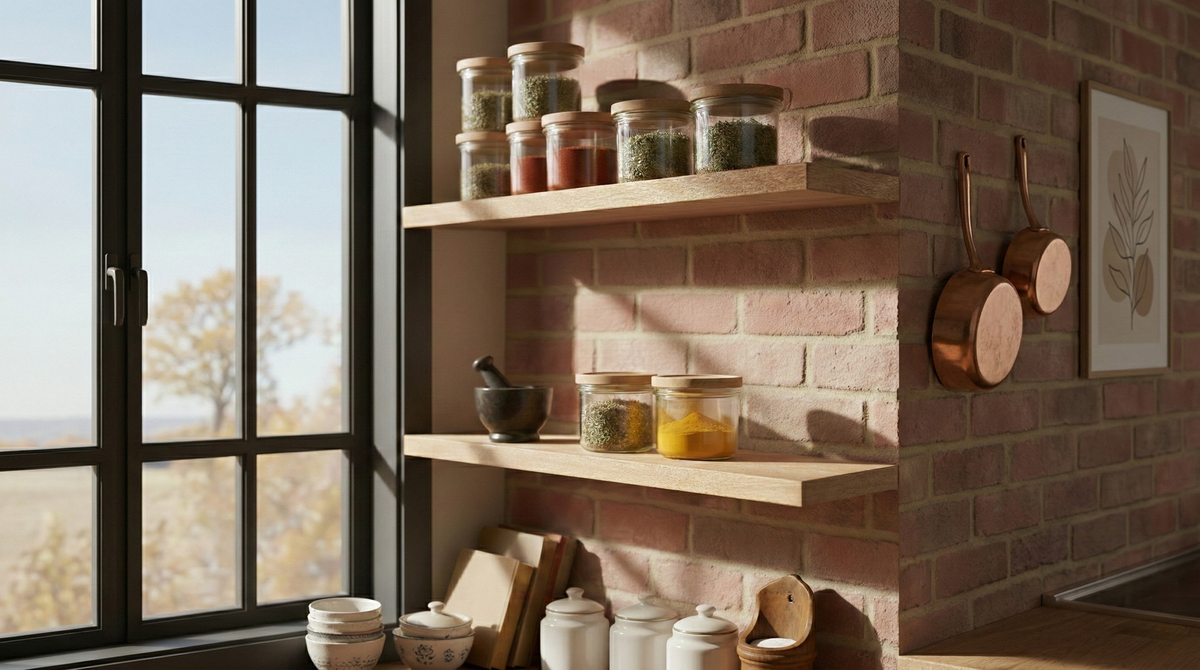
For spices and bulk, the glass jar Le Parfait Wood Edition
Rediscover the pleasure of orderly and inspiring cooking! No more cluttered cupboards, no more bags of spices and packets of pasta who pile up and disembowel themselves. With the new bocal Le Parfait Wood Edition, your shelves are transformed into a real little grocery store with authentic charm. Alliant the...